HOUSING INEQUALITY
Lorem Ipsum is simply dummy text of the printing and typesetting industry. Lorem Ipsum has been the industry’s standard dummy text ever since the 1500s, when an unknown printer took a galley of type and scrambled it to make a type specimen book. It has survived not only five centuries, but also the leap into electronic typesetting, remaining essentially unchanged. It was popularised in the 1960s with the release of Letraset sheets containing Lorem Ipsum passages, and more recently with desktop publishing software like Aldus PageMaker including versions of Lorem Ipsum.
Timeline
Early frontier wars, the gold rush, and land seizures – the beginning of city life
Lorem Ipsum is simply dummy text of the printing and typesetting industry. Lorem Ipsum has been the industry’s standard dummy text ever since the 1500s, when an unknown printer took a galley of type and scrambled it to make a type specimen book. It has survived not only five centuries, but also the leap into electronic typesetting, remaining essentially unchanged. It was popularised in the 1960s with the release of Letraset sheets containing Lorem Ipsum passages, and more recently with desktop publishing software like Aldus PageMaker including versions of Lorem Ipsum.
-
1953 -In Banks vs. the Housing Authority of San Francisco, attorneys Nathaniel Colley , Loren Miller and Terry Francois secured a judgment against the Housing Authority for its discriminatory practices. This case puts a legal end to racial segregation in public housing in California.
-
1954 -The Housing Act of 1954 is signed into law – marking a radical change in housing policy, allowing for the replacement of housing with commercial-oriented urban renewal construction
-
1954 -In Brown vs. Board of Education of Topeka, KS – the U.S. Supreme Court rules “separate but equal” is unconstitutional in American public schools.
-
1954 -Nathaniel Colley’s law office relocated to 621 P Street.
-
1954 -The same week of the Brown v. Board decision in May 1954, World War II veteran and McClellan AFB employee Oliver Ming files suit against a group of Sacramento realtors, developers and construction firms after being denied the right to purchase a home in North Highlands subdivision, near his job at McClellan.
-
1954 -The homes in the subdivision were available via loan guarantees made by the FHA and VA. It became a landmark case without precedent.
-
1954 -In July 1954, the Sacramento City Council approves the Capitol Mall Project. In November, a bond measure to fund the ‘slum clearance’ phase of the project does NOT pass.
-
1954 -The Housing Act of 1954 is signed into law – marking a radical change in housing policy, allowing for the replacement of housing with commercial-oriented urban renewal construction
-
1954 -In Brown vs. Board of Education of Topeka, KS – the U.S. Supreme Court rules “separate but equal” is unconstitutional in American public schools.
-
1954 -Nathaniel Colley’s law office relocated to 621 P Street.
Gallery
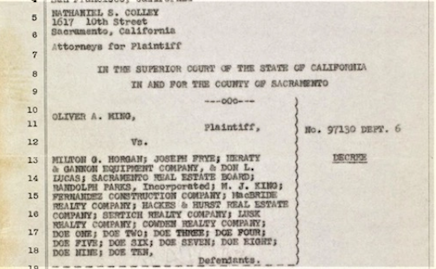 Image Title or information, (Date)
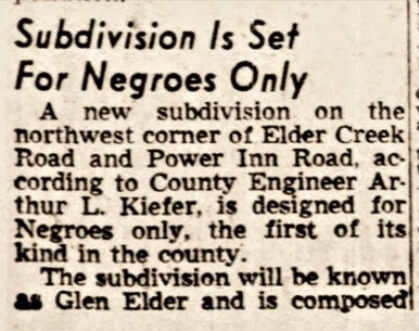 Image Title or information, (Date)
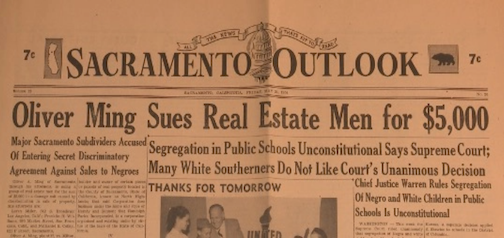 Image Title or information, (Date)
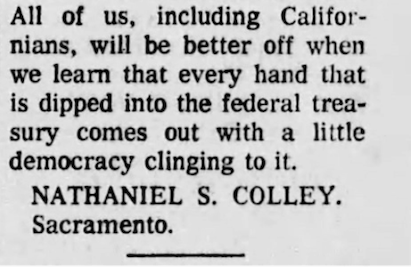 Image Title or information, (Date)
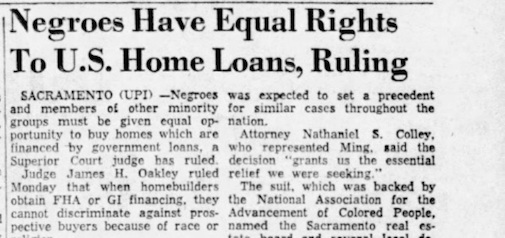 Image Title or information, (Date)
Image Title or information, (Date)
Image Title or information, (Date)
Image Title or information, (Date)
Image Title or information, (Date)
Image Title or information, (Date)
Image Title or information, (Date)
Image Title or information, (Date)
Image Title or information, (Date)
Image Title or information, (Date)
Image Title or information, (Date)
Image Title or information, (Date)
Image Title or information, (Date)
The rise of the urban settlement and separate but equal
Lorem Ipsum is simply dummy text of the printing and typesetting industry. Lorem Ipsum has been the industry’s standard dummy text ever since the 1500s, when an unknown printer took a galley of type and scrambled it to make a type specimen book. It has survived not only five centuries, but also the leap into electronic typesetting, remaining essentially unchanged. It was popularised in the 1960s with the release of Letraset sheets containing Lorem Ipsum passages, and more recently with desktop publishing software like Aldus PageMaker including versions of Lorem Ipsum.
-
1953 -In Banks vs. the Housing Authority of San Francisco, attorneys Nathaniel Colley , Loren Miller and Terry Francois secured a judgment against the Housing Authority for its discriminatory practices. This case puts a legal end to racial segregation in public housing in California.
-
1954 -The Housing Act of 1954 is signed into law – marking a radical change in housing policy, allowing for the replacement of housing with commercial-oriented urban renewal construction
-
1954 -In Brown vs. Board of Education of Topeka, KS – the U.S. Supreme Court rules “separate but equal” is unconstitutional in American public schools.
-
1954 -Nathaniel Colley’s law office relocated to 621 P Street.
-
1954 -The same week of the Brown v. Board decision in May 1954, World War II veteran and McClellan AFB employee Oliver Ming files suit against a group of Sacramento realtors, developers and construction firms after being denied the right to purchase a home in North Highlands subdivision, near his job at McClellan.
-
1954 -The homes in the subdivision were available via loan guarantees made by the FHA and VA. It became a landmark case without precedent.
-
1954 -In July 1954, the Sacramento City Council approves the Capitol Mall Project. In November, a bond measure to fund the ‘slum clearance’ phase of the project does NOT pass.
-
1954 -The Housing Act of 1954 is signed into law – marking a radical change in housing policy, allowing for the replacement of housing with commercial-oriented urban renewal construction
-
1954 -In Brown vs. Board of Education of Topeka, KS – the U.S. Supreme Court rules “separate but equal” is unconstitutional in American public schools.
-
1954 -Nathaniel Colley’s law office relocated to 621 P Street.
From economic depression to segregated urban growth
Lorem Ipsum is simply dummy text of the printing and typesetting industry. Lorem Ipsum has been the industry’s standard dummy text ever since the 1500s, when an unknown printer took a galley of type and scrambled it to make a type specimen book. It has survived not only five centuries, but also the leap into electronic typesetting, remaining essentially unchanged. It was popularised in the 1960s with the release of Letraset sheets containing Lorem Ipsum passages, and more recently with desktop publishing software like Aldus PageMaker including versions of Lorem Ipsum.
-
1953 -In Banks vs. the Housing Authority of San Francisco, attorneys Nathaniel Colley , Loren Miller and Terry Francois secured a judgment against the Housing Authority for its discriminatory practices. This case puts a legal end to racial segregation in public housing in California.
-
1954 -The Housing Act of 1954 is signed into law – marking a radical change in housing policy, allowing for the replacement of housing with commercial-oriented urban renewal construction
-
1954 -In Brown vs. Board of Education of Topeka, KS – the U.S. Supreme Court rules “separate but equal” is unconstitutional in American public schools.
-
1954 -Nathaniel Colley’s law office relocated to 621 P Street.
-
1954 -The same week of the Brown v. Board decision in May 1954, World War II veteran and McClellan AFB employee Oliver Ming files suit against a group of Sacramento realtors, developers and construction firms after being denied the right to purchase a home in North Highlands subdivision, near his job at McClellan.
-
1954 -The homes in the subdivision were available via loan guarantees made by the FHA and VA. It became a landmark case without precedent.
-
1954 -In July 1954, the Sacramento City Council approves the Capitol Mall Project. In November, a bond measure to fund the ‘slum clearance’ phase of the project does NOT pass.
-
1954 -The Housing Act of 1954 is signed into law – marking a radical change in housing policy, allowing for the replacement of housing with commercial-oriented urban renewal construction
-
1954 -In Brown vs. Board of Education of Topeka, KS – the U.S. Supreme Court rules “separate but equal” is unconstitutional in American public schools.
-
1954 -Nathaniel Colley’s law office relocated to 621 P Street.
Fair housing, labor, and the civil right struggle
Lorem Ipsum is simply dummy text of the printing and typesetting industry. Lorem Ipsum has been the industry’s standard dummy text ever since the 1500s, when an unknown printer took a galley of type and scrambled it to make a type specimen book. It has survived not only five centuries, but also the leap into electronic typesetting, remaining essentially unchanged. It was popularised in the 1960s with the release of Letraset sheets containing Lorem Ipsum passages, and more recently with desktop publishing software like Aldus PageMaker including versions of Lorem Ipsum.
-
1953 -In Banks vs. the Housing Authority of San Francisco, attorneys Nathaniel Colley , Loren Miller and Terry Francois secured a judgment against the Housing Authority for its discriminatory practices. This case puts a legal end to racial segregation in public housing in California.
-
1954 -The Housing Act of 1954 is signed into law – marking a radical change in housing policy, allowing for the replacement of housing with commercial-oriented urban renewal construction
-
1954 -In Brown vs. Board of Education of Topeka, KS – the U.S. Supreme Court rules “separate but equal” is unconstitutional in American public schools.
-
1954 -Nathaniel Colley’s law office relocated to 621 P Street.
-
1954 -The same week of the Brown v. Board decision in May 1954, World War II veteran and McClellan AFB employee Oliver Ming files suit against a group of Sacramento realtors, developers and construction firms after being denied the right to purchase a home in North Highlands subdivision, near his job at McClellan.
-
1954 -The homes in the subdivision were available via loan guarantees made by the FHA and VA. It became a landmark case without precedent.
-
1954 -In July 1954, the Sacramento City Council approves the Capitol Mall Project. In November, a bond measure to fund the ‘slum clearance’ phase of the project does NOT pass.
-
1954 -The Housing Act of 1954 is signed into law – marking a radical change in housing policy, allowing for the replacement of housing with commercial-oriented urban renewal construction
-
1954 -In Brown vs. Board of Education of Topeka, KS – the U.S. Supreme Court rules “separate but equal” is unconstitutional in American public schools.
-
1954 -Nathaniel Colley’s law office relocated to 621 P Street.
Predation and segregation: new versions of old policies
Lorem Ipsum is simply dummy text of the printing and typesetting industry. Lorem Ipsum has been the industry’s standard dummy text ever since the 1500s, when an unknown printer took a galley of type and scrambled it to make a type specimen book. It has survived not only five centuries, but also the leap into electronic typesetting, remaining essentially unchanged. It was popularised in the 1960s with the release of Letraset sheets containing Lorem Ipsum passages, and more recently with desktop publishing software like Aldus PageMaker including versions of Lorem Ipsum.
-
1953 -In Banks vs. the Housing Authority of San Francisco, attorneys Nathaniel Colley , Loren Miller and Terry Francois secured a judgment against the Housing Authority for its discriminatory practices. This case puts a legal end to racial segregation in public housing in California.
-
1954 -The Housing Act of 1954 is signed into law – marking a radical change in housing policy, allowing for the replacement of housing with commercial-oriented urban renewal construction
-
1954 -In Brown vs. Board of Education of Topeka, KS – the U.S. Supreme Court rules “separate but equal” is unconstitutional in American public schools.
-
1954 -Nathaniel Colley’s law office relocated to 621 P Street.
-
1954 -The same week of the Brown v. Board decision in May 1954, World War II veteran and McClellan AFB employee Oliver Ming files suit against a group of Sacramento realtors, developers and construction firms after being denied the right to purchase a home in North Highlands subdivision, near his job at McClellan.
-
1954 -The homes in the subdivision were available via loan guarantees made by the FHA and VA. It became a landmark case without precedent.
-
1954 -In July 1954, the Sacramento City Council approves the Capitol Mall Project. In November, a bond measure to fund the ‘slum clearance’ phase of the project does NOT pass.
-
1954 -The Housing Act of 1954 is signed into law – marking a radical change in housing policy, allowing for the replacement of housing with commercial-oriented urban renewal construction
-
1954 -In Brown vs. Board of Education of Topeka, KS – the U.S. Supreme Court rules “separate but equal” is unconstitutional in American public schools.
-
1954 -Nathaniel Colley’s law office relocated to 621 P Street.