“We’re not going to take any bull!”

Activism in Action: Photographs from the Sacramento Bee, 1967-1990

Black Panther Rally, 1973

1983/001/SBM00857

As California’s capital, Sacramento has been the scene of many state and national protests, along with local demonstrations big and small. The Sacramento Bee has covered all manner of social unrest in the capital city since its founding in 1857.

The Center for Sacramento History is fortunate to have in its holdings the Bee’s news photo archive, which dates from the 1950s to 1990s. The photos in this exhibit illustrate the Bee’s coverage of Sacramento’s rich history of protest, agitation, and advocating for one’s rights.

Blanche Hill spent years advocating for Oak Park. Here, she’s collecting signatures to save the neighborhood’s fire station in 1974. Her family, displaced by downtown Sacramento’s 1950s redevelopment, relocated to Oak Park along with many other black families—it was one of the only parts of town that did not have race restrictions on who could live there. As blacks moved in, affluent whites moved out, leaving a community with few resources and little attention from city hall.

Dick Schmidt, photographer

1983/001/SBPMP03409

Skip Shumann, photographer

1983/001/SBPM04850

On July 23, 1981, local Arab American and Palestinian organizations held this funeral procession through Capitol Park to protest a series of strikes that Israel had launched against the Palestinian Liberation Organization in Lebanon that month. One raid alone, a few days before this protest, had killed over 300 people and injured 800.

Morgan Miller, age 15, was arrested on August 11, 1986, at SMUD headquarters while protesting the increasingly expensive and unsafe Rancho Seco nuclear power plant. Because it was owned by a public utility, residents could decide whether it should remain open, and it was put to a public vote twice. In 1989, Sacramento County became the first community to shut down a nuclear plant by popular vote.

Susie Post, photographer

1983/001/SBPM04553

Owen Brewer, photographer

These John F. Kennedy High School students holding a poster of Black Panther Huey Newton were angered by the police’s response to a fight at their school on October 2, 1968. Around 40 black and white students got into a racially tinged brawl that day, and when police broke it up, they arrested 16 students—14 black, 2 white. The violence continued the next day when 10 white teens armed with clubs attacked several black students—all 10 were arrested.

Leo Neibaur, photographer

1983/001/SBPM04697

More than two hundred Latino Californians held a candlelight rally and march at the Capitol on August 23, 1981, advocating for increased representation in the state legislature.
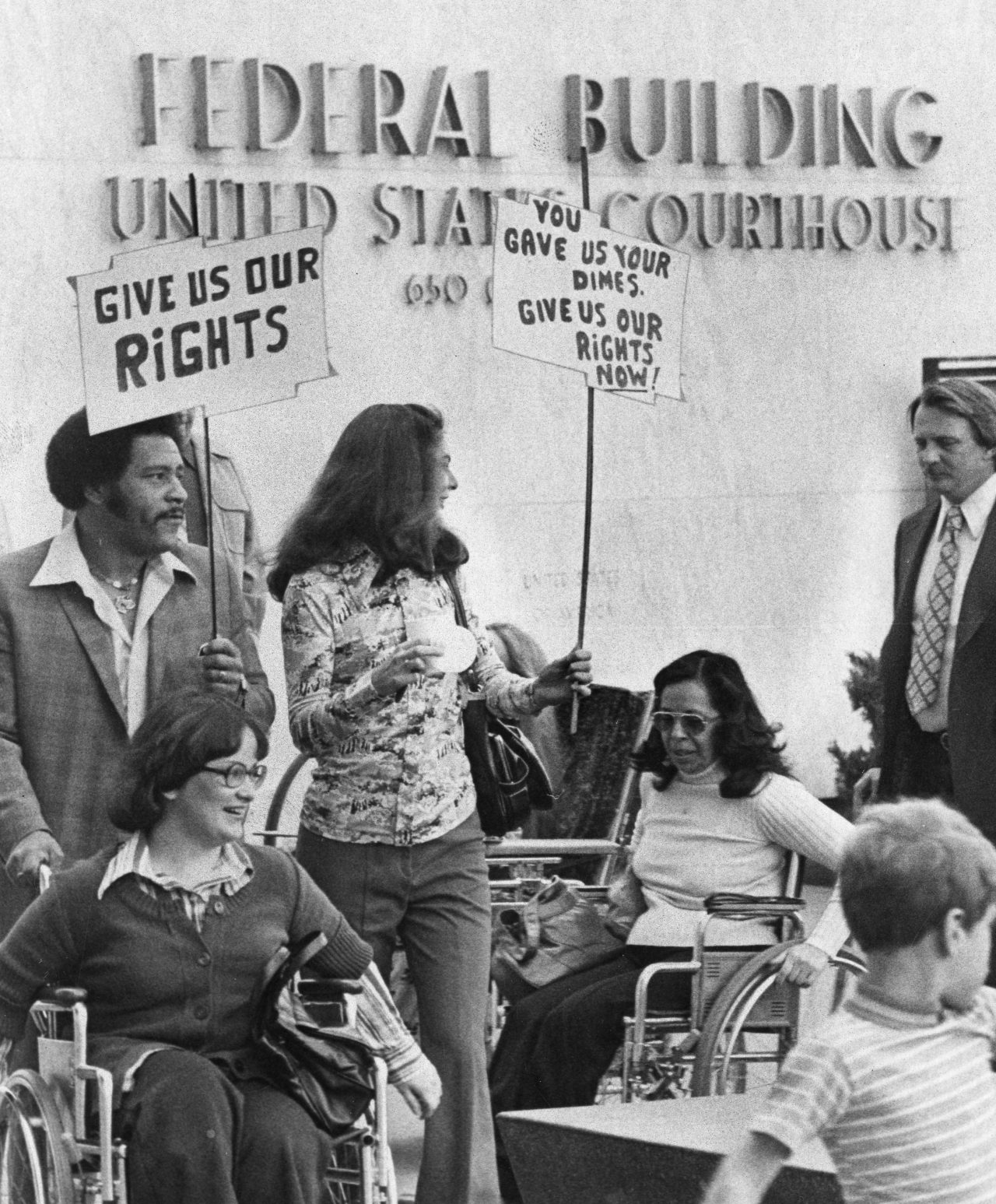
Disability rights activists

Disability rights activists held a demonstration in front of the Sacramento federal building as part of a day of protest across the country on April 5, 1977. They were demanding the U.S. Department of Health and Welfare implement a 1973 amendment to the Civil Rights Act that prohibited workplace discrimination against the disabled.

Dick Schmidt, photographer

1983/001/SBPM04677

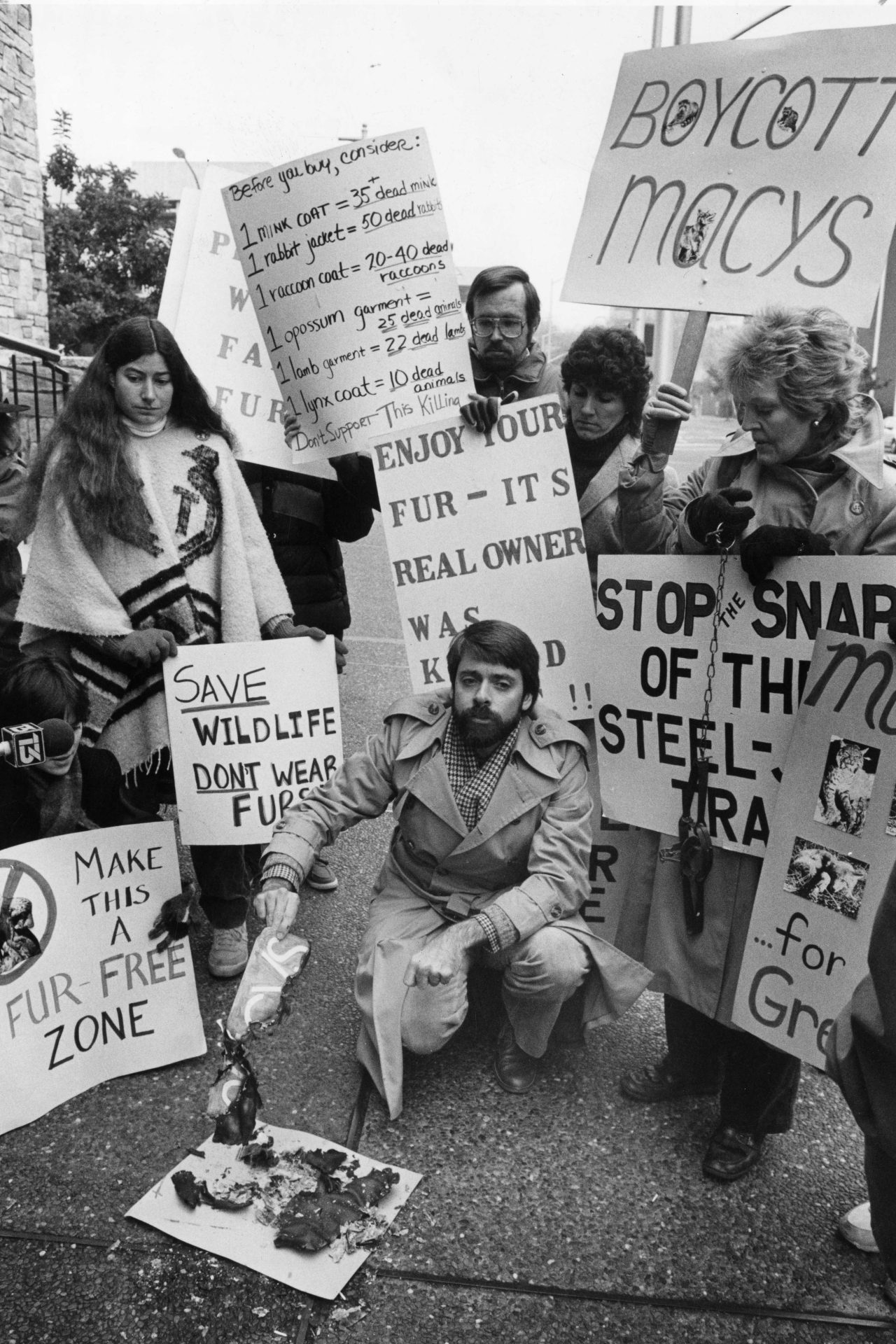
Martin Gorda burned a large fake credit card

Martin Gorda burned a large fake credit card during a January 19, 1985, anti-fur protest of Sacramento’s downtown Macy’s. The demonstration was one of many at Sacramento department stores in the mid-1980s that became increasingly aggressive, with tactics like blocking store aisles, confronting customers, and splattering red paint on fur coats.

Richard Gilmore, photographer

1983/001/SBPM04493

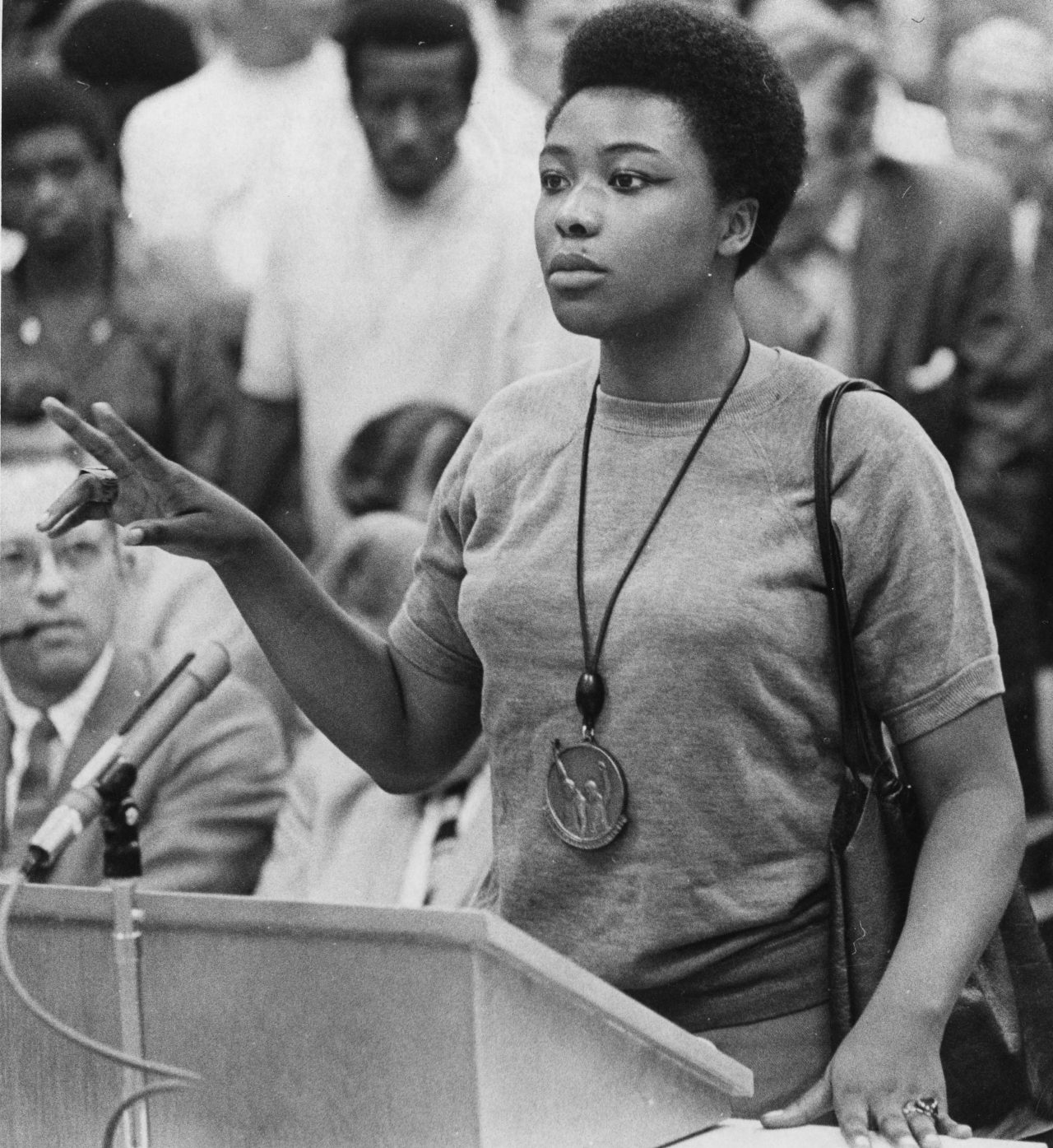
unidentified woman spoke at a city council meeting

This unidentified woman spoke at a city council meeting on June 19, 1969, about ongoing problems with police harassment and over-policing in Oak Park. Four days earlier, tensions had erupted into a gun battle between residents and the police, with police and neighborhood snipers exchanging at least 100 rounds. Several people were injured, but no one was killed. During the melee, police also raided the Black Panthers office on 35th Street.

1983/001/SBPM00869

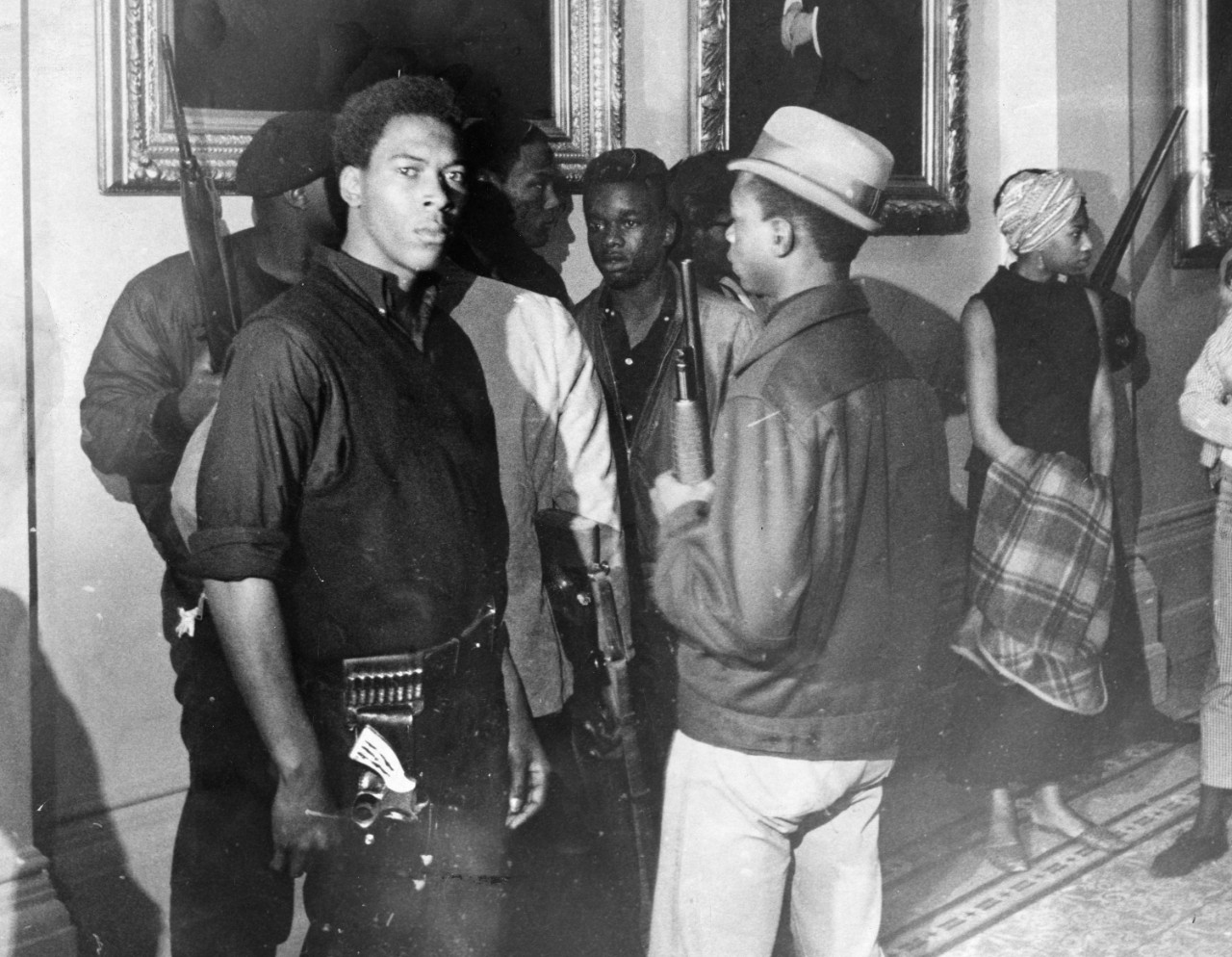
Black Panthers marched into the California state assembly chamber

On May 2, 1967, two dozen armed members of the Black Panthers marched into the California state assembly chamber to protest the recently introduced Mulford Act, which sought to make open carry of loaded firearms illegal. Republican legislator Don Mulford had proposed the bill in response to the Panther’s armed patrols of police in Oakland, which they initiated as a check on police harassment of black residents.

1983/001/SBPM00841

Richard Gilmore, photographer

1983/001/SBPM00021

About 2,000 anti-abortion protestors demonstrated in front of the Capitol on January 20, 1990, to mark the anniversary of Roe v. Wade, greatly outnumbering the 100 or so pro-choice supporters who showed up to counter-protest. Both sides mingled on the sidewalk without incident.

Ward Sharrer, photographer

1983/001/SBPM03179

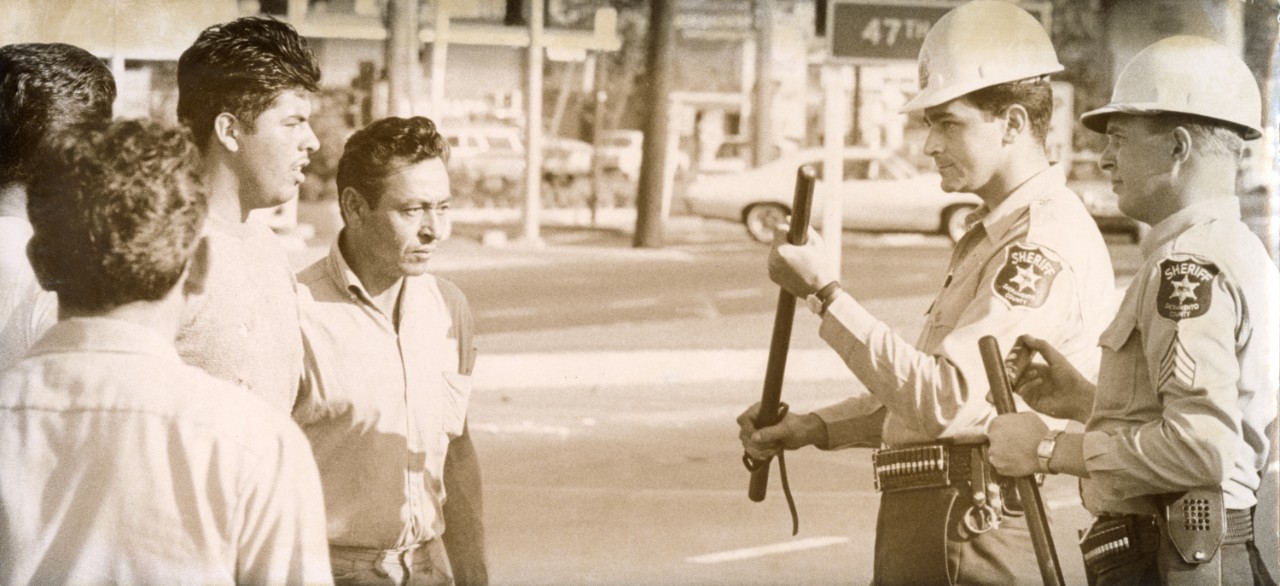
On August 14, 1968, this unidentified woman was confronted by sheriff’s deputies as she tried to stop a truck of tomatoes from entering Campbell Soup’s Sacramento plant on the second day of a strike by members of Food Process Workers Union Local 288.

Tenants of the Robel Motel in Citrus Heights held a protest in August 1983 after Northridge Water District shut off their water due to illegal construction by the motel’s owner. Without water, the motel could be condemned, which the county thought might have been the owner’s intention all along. He planned to tear down the motel, and had served eviction notices to tenants who’d already paid their full rent. The tenants refused to leave and picketed instead.

Frank Stork, photographer

1983/001/SBPM04672

Andrew De Luca, photographer

1983/001/SBPM04511

Two groups staged anti-Vietnam War rallies at the Capitol on March 20, 1971, each with different beliefs on how the U.S. should end the war. A group of around 300 mostly older adults, pictured here, wanted victory before pulling out, while also decrying communism. A younger crowd of around 1,000 called for an immediate end to the war, while also condemning racism and Governor Ronald Reagan’s welfare policies.

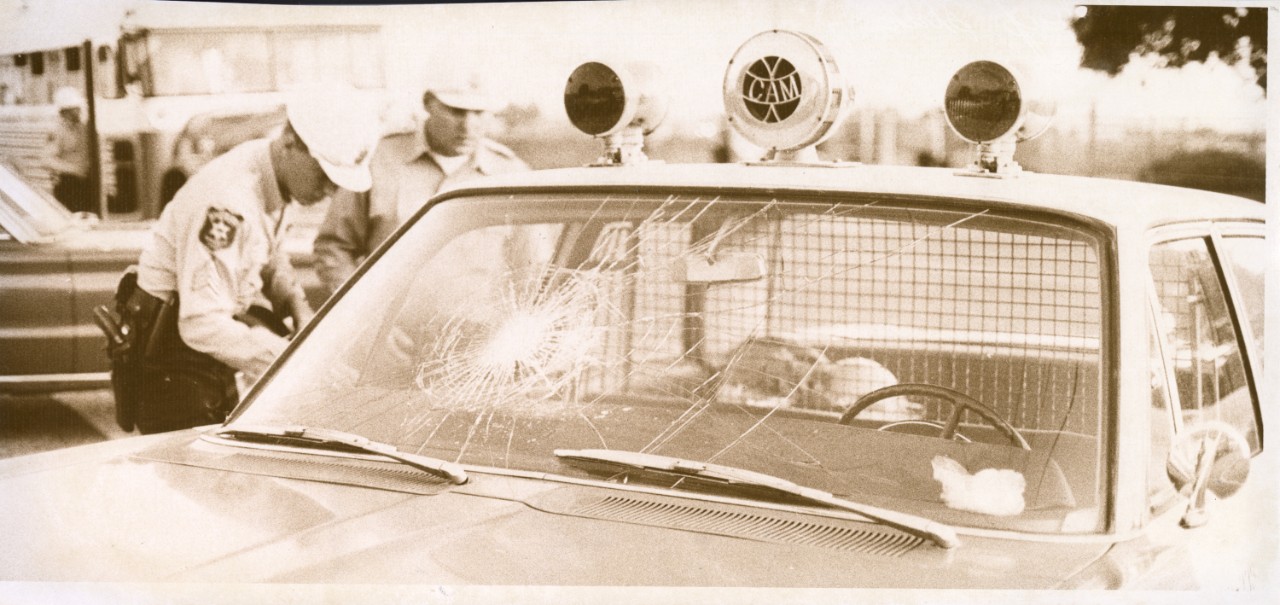
This unidentified woman was forcibly removed to a squad car by sheriff’s deputies after trying to stop a truck from entering Campbell Soup’s Sacramento plant during a strike by members of Food Process Workers Union Local 288 on August 14, 1968.

Ward Sharrer, photographer

1983/001/SBPM03178

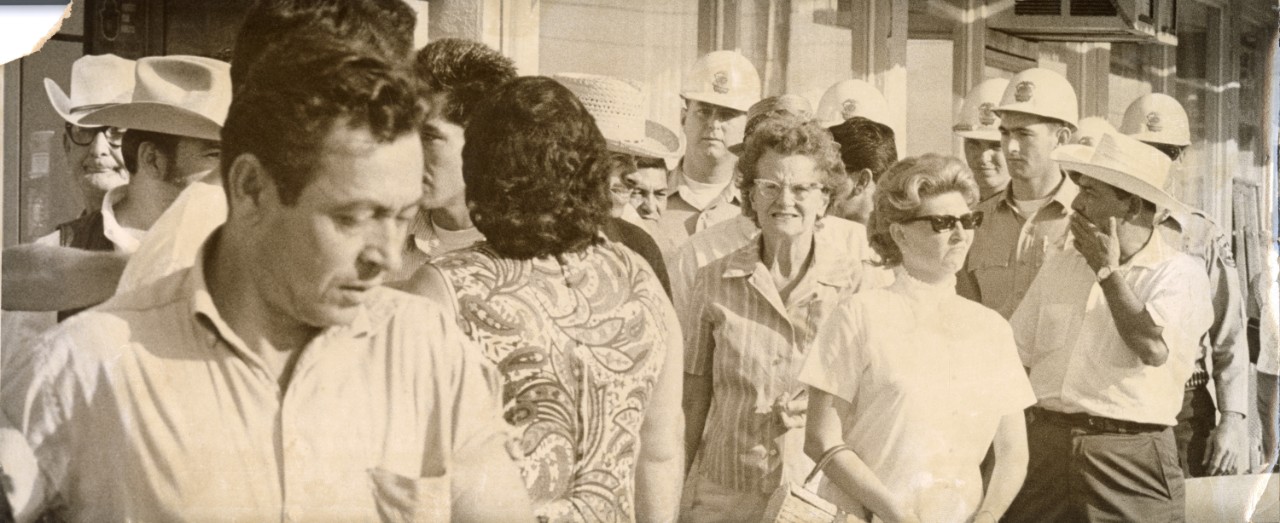
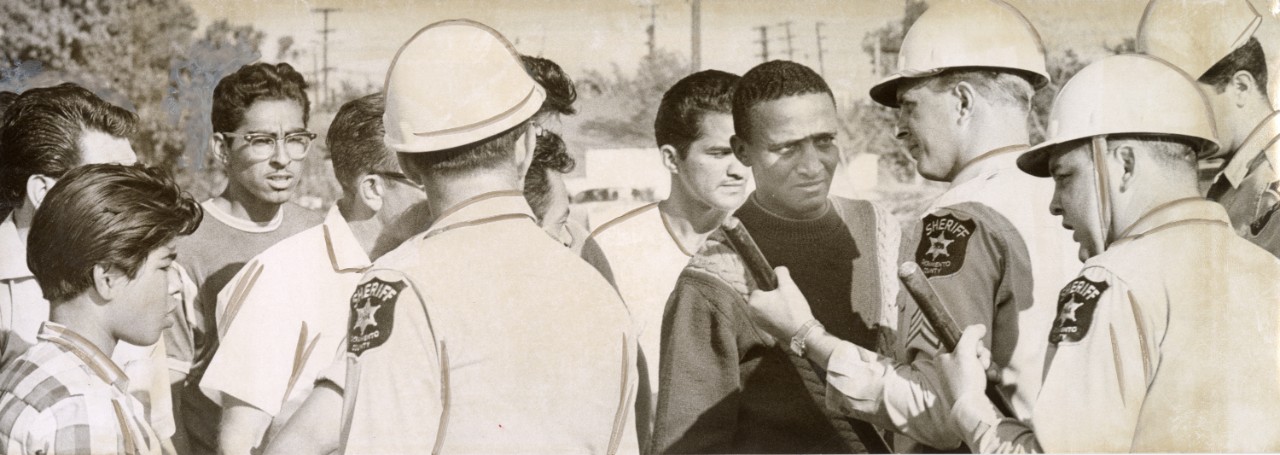
Food Process Workers Union Local 288 went on strike at the Campbell Soup plant in Sacramento in July 1968 as part of a larger nationwide strike. On August 13, picketing at the plant became violent when tomato growers tried to deliver their crops. Protestors threw rocks, blocked trucks, and tossed nails onto the roadways, then fights broke out between union sympathizers and police, and picketers and truck drivers.

Ward Sharrer, photographer

Food Process Workers Union Local 288 went on strike

1983/001/SBPM03172

Food Process Workers Union Local 288 went on strike

1983/001/SBPM03173

Food Process Workers Union Local 288 went on strike

1983/001/SBPM03174

Food Process Workers Union Local 288 went on strike

1983/001/SBPM03177

Stalled negotiations between unions and employers resulted in a five-day strike of 70 California canneries starting July 19, 1973, including Sacramento’s Libby, McNeil & Libby and Sacramento Foods, formerly known as Bercut-Richards. Members of the Cannery Workers and Warehouseman’s Local 587 walked off the job to picket the plants.

Harlin Smith, photographer

1983/001/SBPM15990

Richard Gilmore, photographer

1983/001/SBPM15989

Harlin Smith, photographer

1983/001/SBPM04801

The Del Paso Heights Youth Group held a prayer rally on March 21, 1981, to honor 30 black children and youths who had been abducted and killed in Atlanta over the last few years. Soon after this rally, Wayne Williams was arrested and later convicted of two of the killings, with the rest attributed to him but closed as cold cases—until 2019 when they were reopened for DNA testing.

Sacramento’s Asian community began protesting Fantasia Miniature Golf Course in 1971 due to its signs depicting racist Chinese caricatures and pidgin English. The pickets gained widespread support, with more protests following. Though Fantasia’s unsympathetic owner called the protests “un-American,” he made changes to 10 signs in 1972, and removed all of them after this last protest on March 2 and 3, 1974.

Dick Schmidt, photographer

1983/001/SBPM10013

The January 1, 1852, issue of the Placer Times & Transcript depicts the Squatters’ riot of August 14, 1850, on page two. Settlers arriving in Sacramento during the Gold Rush thought they’d find available land, but most of it had been claimed by John Sutter, with speculators selling lots at outrageous prices. Settlers, questioning Sutter’s right to the land, moved onto it anyway. Suits, evictions, and arrests followed. The squatters organized a militia, whose march through town to protect a jailed squatter’s property kickstarted the riot.

The Placer Times & Transcript covered the Sacramento region during the Gold Rush era. It included engraved images of events, which was unique to the text-heavy newspapers at the time. Also a product of its time, the newspaper uses language that we find offensive today to describe certain people and situations.


Eleanor McClatchy collection

1982/004/0672